Free tools
Radon Test Result Checker
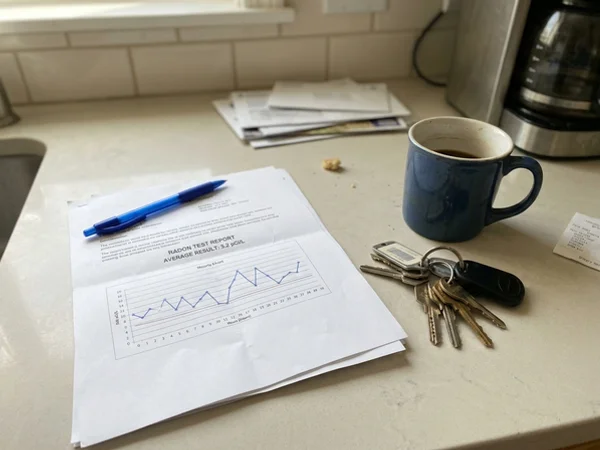
Got a radon number back from a test kit, a home inspector or a continuous radon monitor? This checker puts it in context. It converts your result to Bq/m³, shows how it compares to the EPA and WHO levels, and estimates how much a mitigation system would need to lower it.
Reduction Needed to Reach Target
68%
- Times the EPA Action Level
- 1.55
- Result in Bq/m³
- 229
At or above the EPA action level of 4.0 pCi/L. The EPA recommends mitigation. If this number came from one short-term test, confirm it with a follow-up test or move straight to a fix.
Unit conversion (1 pCi/L = 37 Bq/m³), ratio to the EPA 4.0 action level, and percent reduction needed to reach the chosen target.
Above 4.0 pCi/L? Let's Fix It
Send your result and foundation type and we'll recommend the right system.
How it works
How the Test Result Checker Works
-
Step 01
Unit conversion
US test reports use picocuries per liter (pCi/L). Most other countries and the WHO use becquerels per cubic meter (Bq/m³). One pCi/L equals 37 Bq/m³.
-
Step 02
EPA action level
The EPA recommends fixing a home at 4.0 pCi/L or higher. We divide your result by 4.0 to show how many times over that line you are.
-
Step 03
Reduction needed
We compare your result to the target you pick and show the percent drop needed to reach it. A properly installed active system typically brings levels below 4.0 pCi/L, and often below 2.0.
FAQ
Test Result Checker Questions
No level of radon is risk-free. The EPA recommends fixing your home at 4.0 pCi/L or higher and suggests considering a fix between 2.0 and 4.0 pCi/L. The WHO reference level is 100 Bq/m³, about 2.7 pCi/L.
A 2- to 7-day test is a snapshot. Radon changes with weather and season, so the EPA suggests a follow-up test before deciding, unless you're on a real estate deadline. A long-term test of 90 days or more gives the best year-round average.
Every system we install is checked with a post-mitigation test. It's included in our quote, so you get a number in writing showing the drop.
Still have a question?
Our support line answers 24 hours a day, 7 days a week.
Guides
Related Guides and Tools
More services